
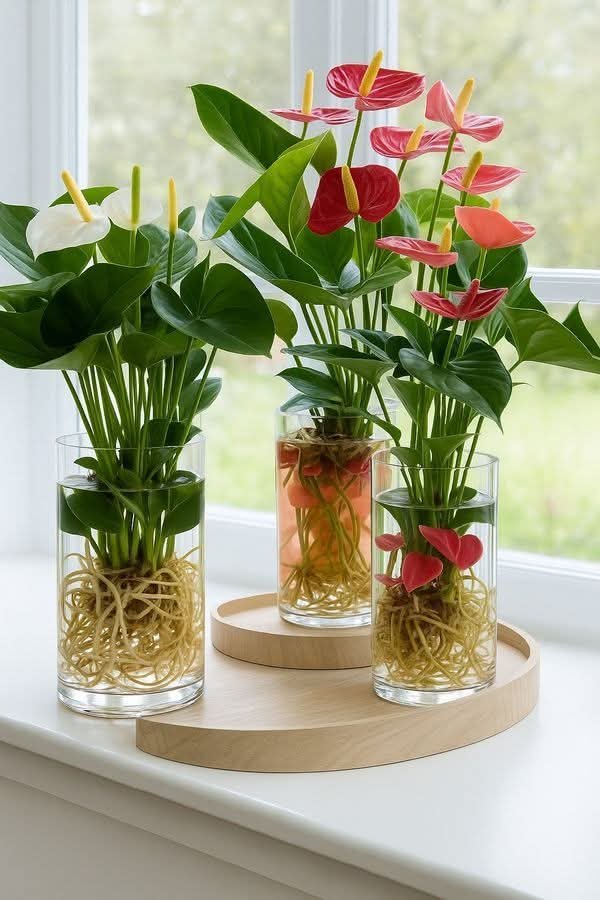
🌿 How to Grow White Anthuriums Successfully
White anthuriums (Anthurium andraeanum) are elegant tropical plants known for their glossy green leaves and long-lasting white “flowers” (spathes). They aren’t difficult to grow—but they do require the right conditions.
✅ 1. Light Requirements
Bright, indirect light is essential.
A spot near a window with filtered light is ideal.
They tolerate medium light but may produce fewer or smaller flowers.
Avoid:
Harsh direct sun → scorches leaves.
Low light → no blooms, leggy growth.
✅ 2. Watering
Water when the top 1–2 inches of soil feel dry.
Use room-temperature, non-chlorinated water if possible.
Water thoroughly until water runs out of the pot’s drainage holes.
Important:
Anthuriums prefer slightly moist, not soggy, soil.
Allow partial drying between waterings.
✅ 3. Humidity
As tropical plants, white anthuriums love 60–80% humidity.
Increase humidity by:
Using a humidifier
Grouping plants together
Placing the pot on a pebble tray with water
Keeping away from heaters or vents
✅ 4. Temperature
Ideal temperature: 18–27°C (65–80°F).
Protect from drafts, AC vents, and cold windows.
Below 12°C (55°F) can cause leaf damage and stunt growth.
✅ 5. Soil Mix
Use a chunky, well-draining mixture similar to orchid or aroid soil.
Recommended mixture:
1 part peat or coco coir
1 part orchid bark
1 part perlite
Optional: a handful of charcoal or sphagnum moss
This keeps roots airy and prevents rot.
✅ 6. Fertilizing
Feed every 4–6 weeks during spring and summer.
Use a balanced liquid fertilizer (20-20-20) at ¼ strength.
Too much fertilizer → yellow or burnt leaf tips.
✅ 7. Repotting
Repot every 1–2 years or when roots grow out of the pot.
Choose a pot only 1–2 inches larger.
Avoid oversized pots—they retain too much water.
🚫 Common Mistakes to Avoid
- Overwatering (The #1 Killer)
Anthuriums hate sitting in water.
Soggy soil → root rot, yellow leaves, no blooms.
- Incorrect Soil
Regular garden soil or dense potting mix suffocates the roots.
Always use airy, chunky mix.
- Too Much Direct Sun
Leaves get bleached, brown, or crispy.
White flowers turn greenish or brown.
- Low Light
Beautiful plant, but no blooms.
Slow, weak growth.
- Low Humidity
Leaf edges turn brown or crispy.
Plant looks “tired” even if watered.
- Using Hard or Chlorinated Water
Can cause brown leaf tips and salt buildup.
Use filtered or left-out overnight tap water.
- Cold Temperature Exposure
Causes dark, mushy spots on leaves.
Can stop blooming for months.
🌼 Bonus: How to Encourage More White Blooms
Provide bright indirect light.
Keep temps warm (above 20°C).
Fertilize lightly, not heavily.
Avoid stress from drafts or overwatering.
Repot when root-bound.
Bloom time usually lasts 6–8 weeks per flower, and healthy plants bloom several times a year.