
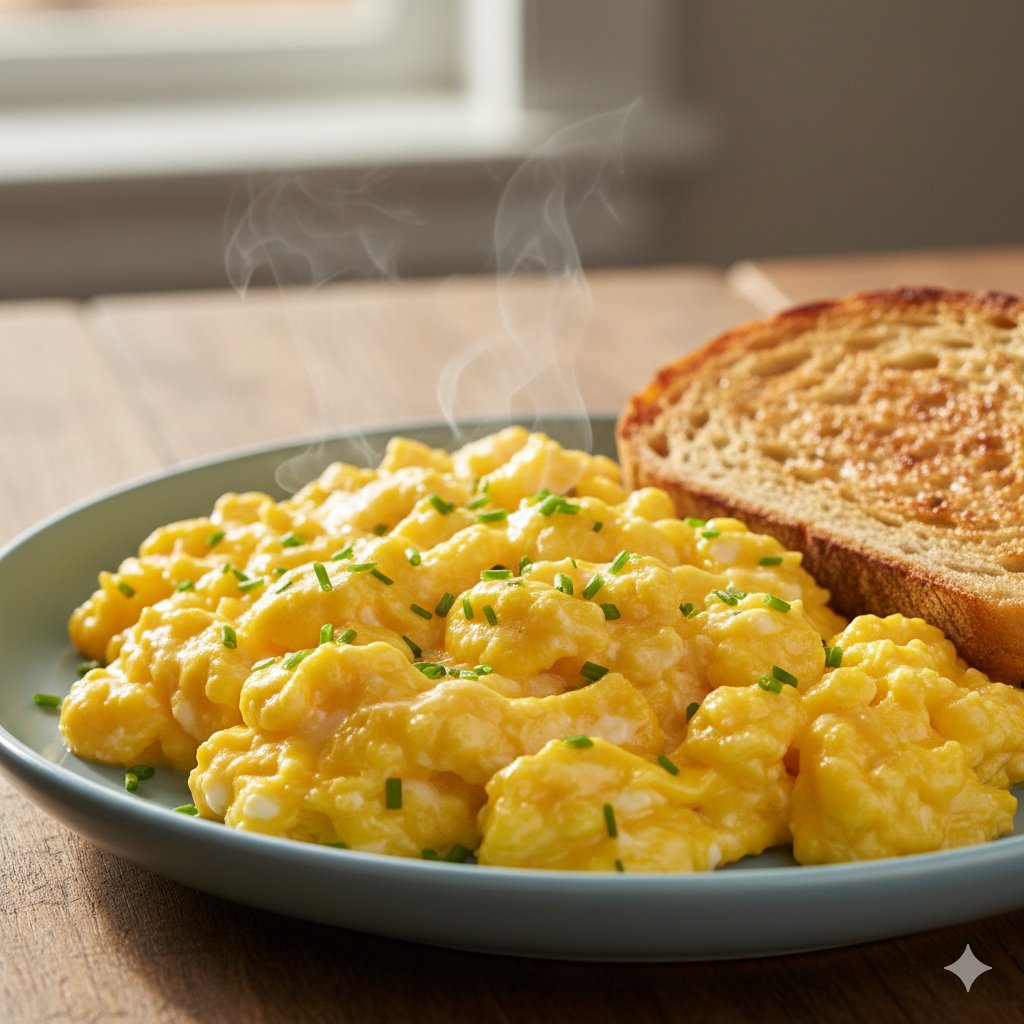
Extra Fluffy Cottage Cheese Scrambled Eggs (High-Protein Breakfast)
This formulation utilizes the thermal insulation properties of cottage cheese to produce a scrambled egg with superior moisture retention and volume. By introducing small-curd cottage cheese into the whisked egg matrix, we create localized moisture pockets that steam from within during the cooking process, preventing the egg proteins (ovalbumin) from over-coagulating and becoming rubbery. As the eggs set, the cottage cheese curds partially melt, integrating into the folds to create a creamy, curd-like texture without the need for high-fat heavy cream or excessive butter. This results in a significant boost to the leucine content of the meal while maintaining a soft, pillowy mouthfeel.
Recipe Details
- Prep Time: 2 Min
- Cook Time: 5 Min
- Total Time: 7 Min
- Yield: 1 Serving
- Calories: 230 kcal per serving
Ingredients:
The Protein Matrix
- 2 Large Eggs
- 1/4 cup (55g) Low-fat Cottage Cheese (Small curd)
- 1/2 tsp Unsalted Butter or Avocado Oil Spray
- 1 pinch Sea Salt & Black Pepper
Optional Aromatics
- 1 tsp Fresh Chives (finely chopped)
- 1/4 tsp Garlic Powder
Preparation Steps:
1. Cold Phase Homogenization
- In a medium bowl, crack the eggs and add the cottage cheese, salt, pepper, and garlic powder.
- Whisk vigorously for 30–45 seconds. While the cottage cheese curds will remain visible, the goal is to fully incorporate the egg yolks and whites into a uniform liquid suspension around the curds.
2. Low-Temperature Thermal Setting
- Place a non-stick skillet over medium-low heat. Add the butter or spray and allow it to coat the surface.
- Pour the egg mixture into the center of the pan. Let it sit undisturbed for 20–30 seconds until the bottom layer begins to set.
- Using a silicone spatula, gently push the eggs toward the center in long, sweeping motions. This creates large, soft folds rather than small, dry fragments.
3. Residual Heat Finishing
- Continue folding for 2–3 minutes. Remove the skillet from the heat when the eggs look slightly undercooked and glossy.
- The residual heat of the pan will continue to cook the eggs for another 30 seconds. This is critical to ensure the cottage cheese remains creamy rather than drying out.
- Garnish with fresh chives and serve immediately on a warm plate.
Expert Tips:
- The Curd Size: Opt for small curd cottage cheese for better integration. Large curds can create excessive “wetness” in the pan, which may interfere with the eggs’ ability to set.
- Heat Management: Never cook these eggs over high heat. High temperatures cause the cottage cheese to release its whey too rapidly, resulting in a watery pool at the bottom of the pan.
- The Blender Variation: For a completely uniform, “soufflé-style” texture with no visible curds, blend the eggs and cottage cheese together before cooking. This will produce a remarkably airy, yellow scramble.