
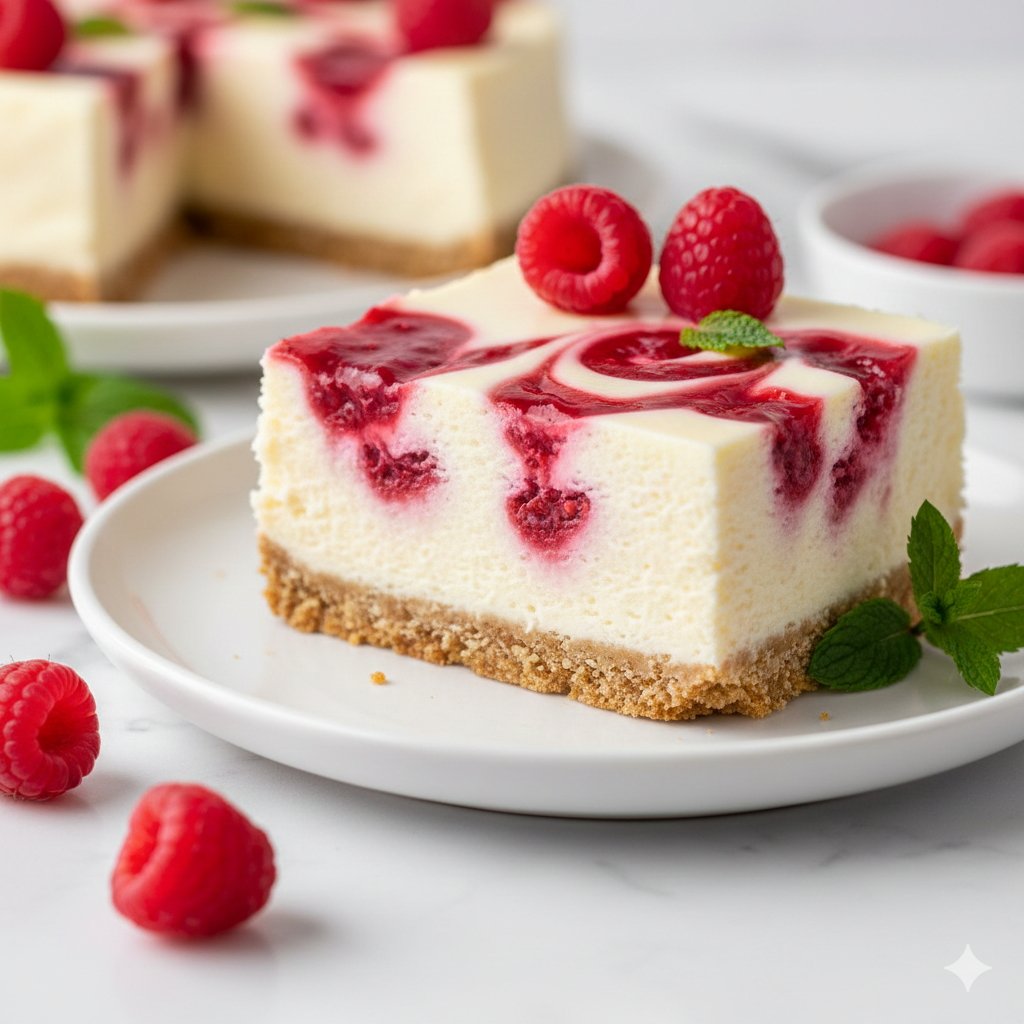
High-Protein Raspberry Cheesecake Slices (Low-Fat/High-Protein Formula)
This formulation re-engineers the classic cheesecake into a functional macronutrient profile by replacing heavy cream and full-fat cream cheese with a tri-protein blend of low-fat cream cheese, Greek yogurt, and whey-casein. To achieve a creamy texture without the high lipid content, the recipe relies on low-temperature thermal coagulation, which prevents the egg and dairy proteins from contracting too rapidly and becoming rubbery. The raspberry swirl provides a natural acid contrast to the density of the cheesecake, while the crust uses a compressed oat matrix to provide complex carbohydrates and structural integrity.
Recipe Details
- Prep Time: 15 Min
- Cook Time: 35 Min
- Total Time: 50 Min (plus 4 hours chilling)
- Yield: 8 Slices
- Calories: 175 kcal per slice
Ingredients:
The Compressed Fiber Crust
- 100g Graham Cracker Crumbs or Oat Flour
- 2 tbsp Zero-Calorie Granulated Sweetener
- 3 tbsp Melted Light Butter or Coconut Oil
The High-Protein Custard
- 250g (1 block) Low-Fat Cream Cheese (Room temperature)
- 1 cup (245g) Non-fat Greek Yogurt
- 1 scoop (31g) Vanilla Whey/Casein Protein Powder
- 2 Large Eggs
- 1/3 cup Zero-Calorie Granulated Sweetener
- 1 tsp Vanilla Extract
The Raspberry Reduction
- 1/2 cup Fresh or Frozen Raspberries
- 1 tbsp Water
- 1 tsp Lemon Juice
Preparation Steps:
1. Crust Structural Setting
- Preheat your oven to 160°C (325°F). Line an 8×8 inch square pan with parchment paper, leaving an overhang for easy removal.
- Mix the crumbs/oat flour, sweetener, and melted butter. Press firmly into the bottom of the pan to create a uniform foundation.
- Bake for 8 minutes, then remove and let cool while preparing the filling.
2. Custard Homogenization
- In a large bowl, beat the room-temperature cream cheese and sweetener until smooth. Critical: If the cream cheese is cold, the batter will remain “lumpy,” ruining the velvet mouthfeel.
- Whisk in the Greek yogurt, protein powder, and vanilla.
- Add the eggs one at a time, mixing on low speed just until incorporated. Do not over-beat, as excess aeration will cause the cheesecake to rise and then collapse/crack during cooling.
3. Geometric Swirling & Baking
- Simmer raspberries, water, and lemon juice in a pan for 5 minutes, then strain out the seeds.
- Pour the cheesecake batter over the crust. Drop small spoonfuls of the raspberry reduction on top and use a toothpick to create a marbled aesthetic.
- Bake at 160°C (325°F) for 25–30 minutes. The edges should be set, but the center should still have a slight jiggle.
- Turn off the oven and leave the door slightly ajar for 30 minutes. This gradual cooling prevents the protein matrix from cracking.
- Refrigerate for at least 4 hours before slicing.
Expert Tips:
- The “Jiggle” Factor: Never bake a cheesecake until it is “solid.” Residual heat continues to cook the center as it cools. If it doesn’t jiggle when you pull it out, it will likely be dry and crumbly once chilled.
- Room Temperature Ingredients: Ensure eggs and yogurt are at room temperature. Cold ingredients added to cream cheese cause the fats to re-solidify into small granules, resulting in a grainy texture.
- The Clean Cut: For professional-looking slices, dip a sharp knife in hot water and wipe it dry between every single cut.